
How much time should you plan for wedding couple portraits?
The time needed for couple portraits depends on the setting, your expectations, travel and the pace you want for your wedding. There is no ideal duration that applies to every celebration. A short session in a well-chosen location may suit a couple eager to rejoin their guests; several smaller sessions may suit people who want different settings or light. Start by describing the images you value and the experience you want, then ask your team to assess what is practical within your actual plans.
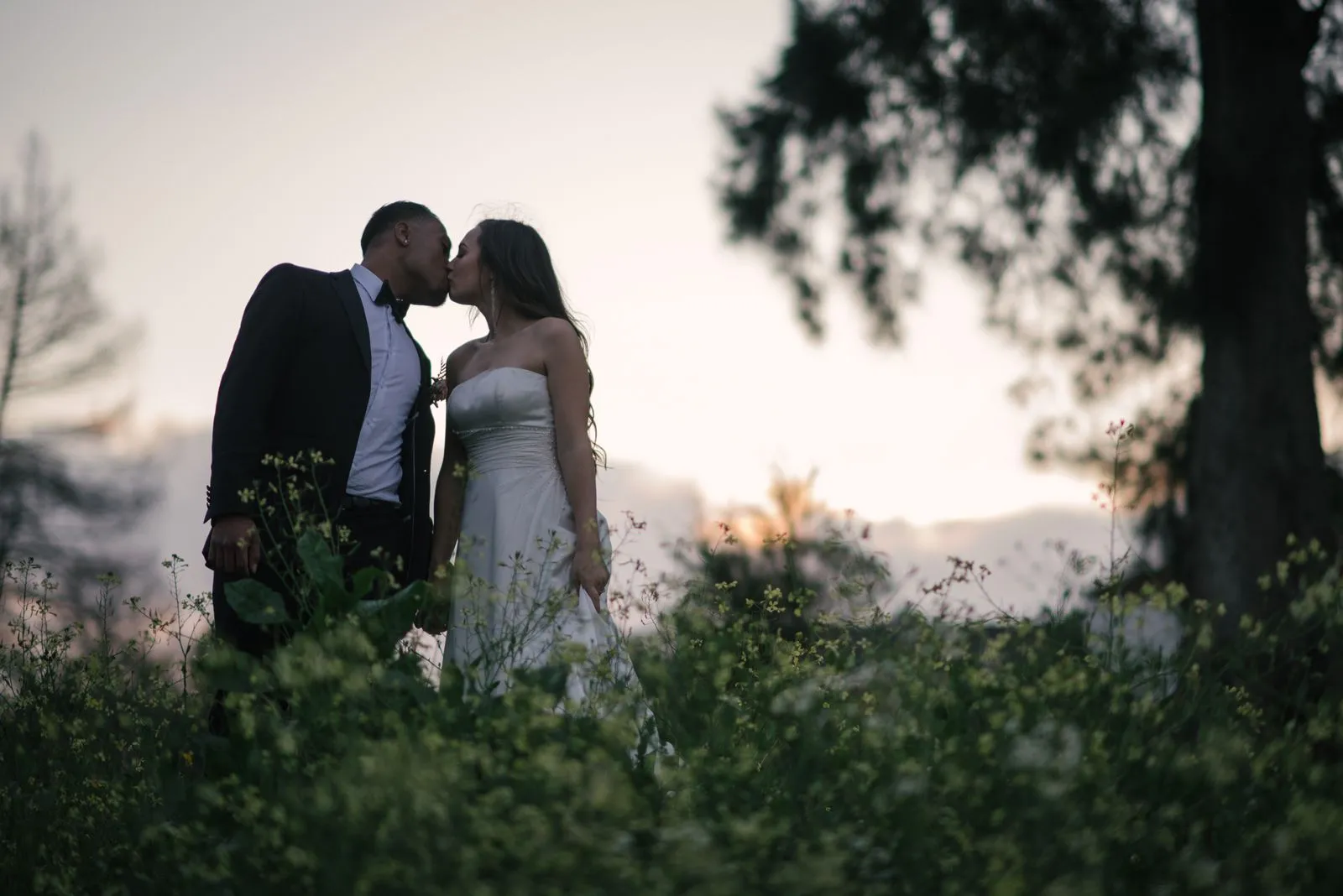
Define the feeling you want
Use specific words to describe the atmosphere: calm, movement, intimacy, architecture or landscape. Explain how comfortable you feel in front of a camera as well. A couple hoping to walk and talk may need a different approach from a couple imagining carefully composed editorial portraits with more detailed direction.
Choose a few references to communicate an intention, without turning them into a reproduction list. Explain what attracts you to each image, whether it is the closeness, composition or light. Your team can then suggest an approach that works with your personalities and the real setting.
Separate portrait time from travel time
The scheduled block needs to include reaching the setting, taking small breaks and returning. If a large share of a portrait appointment is spent in transit, the usable time will be very different from what the calendar first suggests. Count the transition before deciding whether the session feels long enough.
Compare two concrete options: staying near the wedding location or travelling to another backdrop. For each, consider parking, permission, stairs and walking surfaces. A nearby space may offer several angles without a full location change; ask your team what they can realistically see working there.
Choose one session or several shorter visits
A continuous session gives you time to settle in and explore a location without interruption. Several shorter visits can spread the effort and use different light. The second approach only works when leaving and returning fits the reception activities and does not repeatedly pull you away from your guests.
For example, portraits after the ceremony might be followed by another brief outing later, if conditions allow. Do not assume the meal or the light will always support that second visit. Establish a realistic foundation first, then treat additional images as a possibility to discuss with your team.
Plan for physical comfort
Footwear, weather, fatigue and clothing affect comfort directly. Have water, an appropriate layer and suitable walking shoes available when needed. These details are about more than appearance: being comfortable helps you stay attentive to each other rather than concentrating on cold hands, an awkward route or a painful pair of shoes.
Mention mobility needs and preferences about positions before the wedding. You do not have to justify a break or accept an uncomfortable route to receive meaningful portraits. The session should work around you and permitted access, with alternatives that can change when conditions or energy levels change.
Coordinate photography and video within the block
If both photography and video are planned, describe your priorities to both disciplines. A photograph can capture a single instant, while a video sequence may need continuous movement or a quieter sound environment. Those needs work together more smoothly when the team can anticipate them before the portrait session begins.
Ask how directions and positions will be coordinated. Avoid assuming every scene requires two identical sessions. The time needed depends on the agreed scope and working approach; it should be discussed with your team instead of calculated from somebody else’s wedding example or a generic online checklist.
Make a simple choice for a shorter window
Identify your most important priority: a few quiet portraits together, a particular setting or a quality of light you love. Rank the optional ideas after that. If the day runs late, this hierarchy prevents the remaining time from being consumed by decisions and protects the images that mean most to you.
Keep a nearby accessible option for changing weather or a revised schedule. Agree with your team on when to make that call. You can then adjust the route without treating the session as a failure simply because the final plan looks different from the original version.
Frequently asked questions
Can portraits happen before the ceremony?
Yes, if that suits your preferences and schedule. Discuss seeing each other’s outfits, privacy at the location and which people would need to be ready earlier.
Do we need several portrait locations?
No. One location can offer plenty of visual variety. Add another trip only when it contributes something important to the memories you want to keep.
More ideas
for your day.
How to organize family photographs without slowing the wedding
Organize family wedding photos with a clear group list, an accessible meeting place and helpful coordinators to keep the gathering comfortable and simple.
ExploreThe first look: benefits and things to consider
Decide whether a first look suits your wedding by considering privacy, timing, emotions and the portraits you want before and after the ceremony.
ExploreIt all begins
with you.
A date, a place, a few ideas. Tell us what you have in mind, and let’s imagine memories that feel like you.
Check our availability