
How to organize family photographs without slowing the wedding
Family photographs move more comfortably when the participants, group order and gathering place are established before the wedding. Finding people often takes more effort than photographing them. A little preparation lets you focus on the relationships that matter without turning the session into a roll call for the entire guest list. Your plan should reflect your actual family, the mobility of the people involved and your comfort with particular combinations. A useful list is personal, clear and manageable, rather than borrowed unchanged from another wedding.
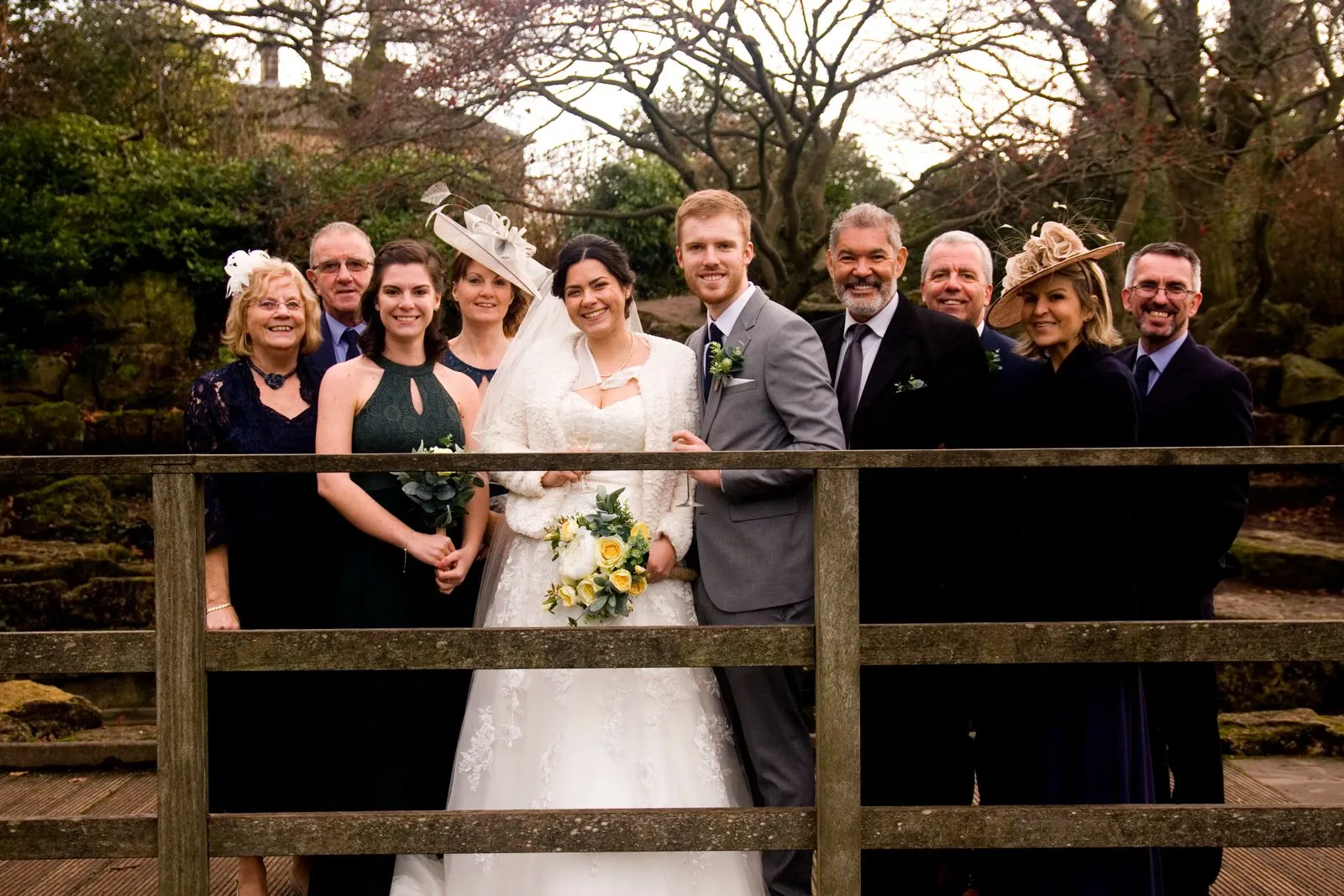
Write specific and personal group combinations
Replace broad instructions such as “the whole family” with the names of the people in each photograph. Identify relationships only when they help clarify the list. Blended families, chosen family and relatives who share a first name deserve wording that does not leave the team guessing who should be standing together.
Start with essential portraits and add secondary combinations afterwards. Every additional group involves another call, arrangement and sometimes a search. Ask whether two similar combinations tell meaningfully different stories or whether one image would satisfy the reason you wanted both on the list.
Tell participants before the wedding
Give the relatives involved a planned time and an understandable meeting point. Instructions delivered only as people leave the ceremony may disappear among the congratulations. Ask participants to remain available until their groups are finished, according to the sequence you have agreed with your team. Clear notice helps guests plan their own movements.
Include the people accompanying children or guests who need assistance. A brief message can cover the location, the point in the day and the person to contact. Avoid giving several relatives slightly different instructions and expecting the photographer to reconcile them during the session.
Choose a place that works for people
A group setting first needs to be accessible and comfortable. Check steps, walking distance, shelter and somewhere nearby to sit. Your team can then assess composition and light under the actual conditions. A visually attractive backdrop is less useful if important participants cannot safely reach it or comfortably wait there.
Somewhere close to the ceremony may simplify gathering, but consider how other guests will circulate. Avoid obstructing an exit or relying on an unauthorized space. Have an indoor alternative that can accommodate the larger essential groups, rather than choosing a backup suitable only for two people.
Give gathering duties to informed helpers
Choose a coordinator who recognizes relatives from each side, or two people when that is more practical. Their task is to assemble the next group while the team photographs the current one. They should not have to decide which combinations matter or negotiate additions in front of everyone.
Give them the same list you share with your team. Agree on how to handle a temporary absence: move to the next available group or revisit a combination later. This small decision prevents the entire session from stopping because one participant has gone to collect something from a vehicle.
Order groups around comfort and availability
Photograph groups involving people who tire easily, children needing a break or guests leaving before the reception early in the sequence where practical. Then try to keep some participants in place as combinations change. The resulting order should still be easy for your helpers and the team to understand.
Privately flag separations, bereavements or tensions that affect group arrangements. You can request separate photographs of particular people. The purpose is respectful family memories; nobody should encounter a sensitive situation publicly when a quiet explanation beforehand could have helped everyone handle it with care.
Make the ending clear
Identify a final group and a clear way to release participants. Without an announced finish, some guests remain waiting while others suggest more combinations. Give someone permission to gently explain that the essential list is complete and the day is moving on. That boundary can keep a pleasant session from becoming exhausting.
Additional informal portraits may be discussed during the reception, depending on coverage and circumstances. Avoid promising a later photograph to every guest. A manageable main list protects your energy and leaves more space for spontaneous interactions with the people you have gathered to celebrate with you.
Frequently asked questions
Does every guest need a formal group photograph?
No. Choose the relationships you want documented in an organized way. Other interactions may become part of candid coverage, depending on the moments that unfold and your agreed scope.
What happens if someone is missing?
Agree on a rule with your team and family coordinator: continue with available groups, then reassess. Returning to a combination depends on the person becoming available and the remaining schedule.
More ideas
for your day.
The first look: benefits and things to consider
Decide whether a first look suits your wedding by considering privacy, timing, emotions and the portraits you want before and after the ceremony.
ExploreHow to prepare getting-ready spaces for wedding photographs
Prepare getting-ready spaces with comfortable light, clear movement and meaningful details for natural wedding photographs that still feel personal to you.
ExploreIt all begins
with you.
A date, a place, a few ideas. Tell us what you have in mind, and let’s imagine memories that feel like you.
Check our availability