
The first look: benefits and things to consider
A first look is an arranged meeting where you see each other in your wedding outfits before the ceremony. It can create time together and allow some portraits to happen earlier, while also changing how you experience the ceremony entrance. The choice depends on your preferences, traditions and the practical structure of the day. Discuss what the meeting would give you instead of treating it as an obligatory event or an automatic solution to every timeline challenge. The most useful plan is one you both understand and want.
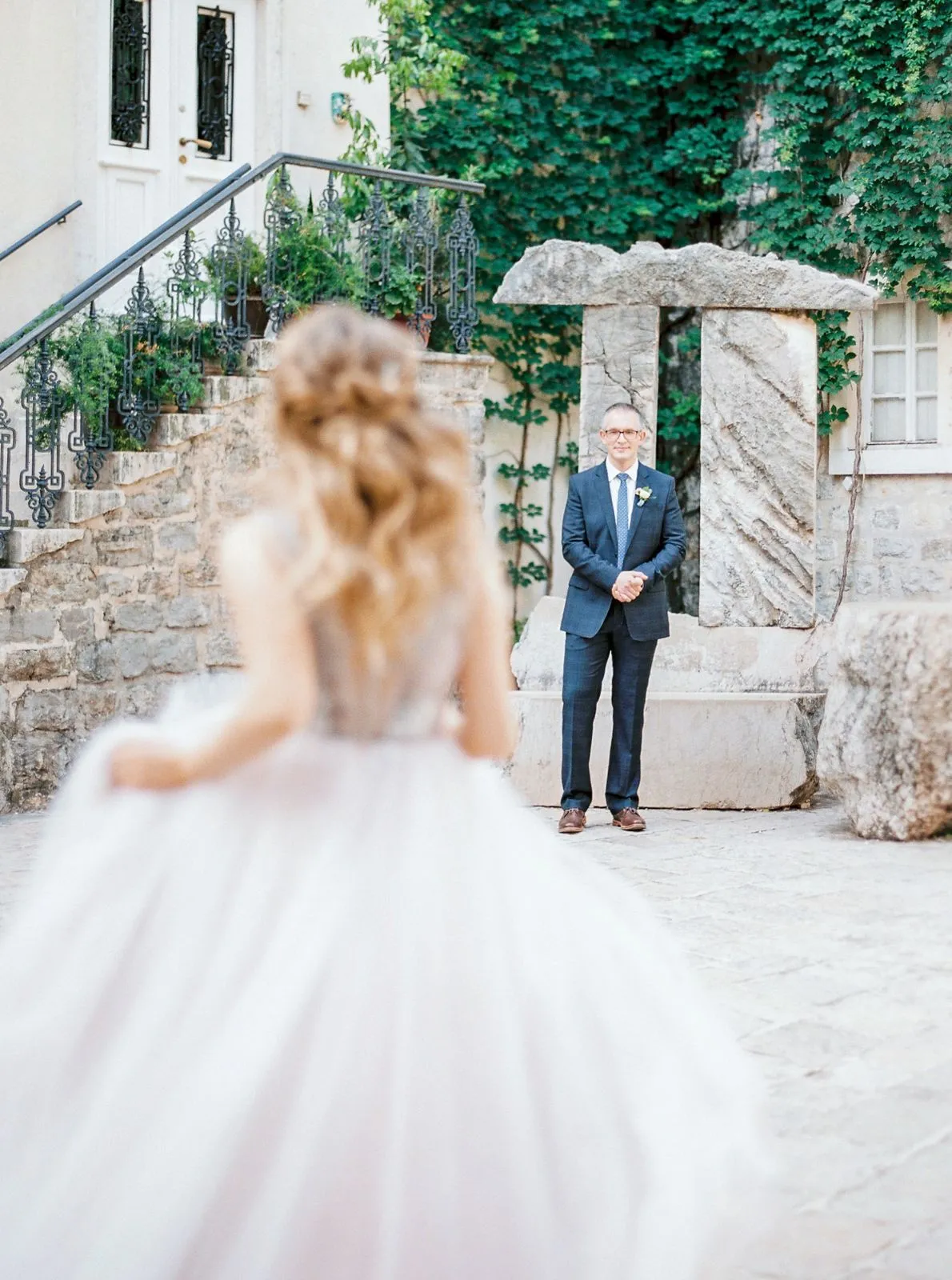
Begin with the emotional experience you prefer
Picture your first meeting: somewhere private, surrounded by loved ones or at the beginning of the ceremony. Some people appreciate being able to speak and embrace immediately. Others want the discovery to remain part of the symbolic experience of entering the ceremony. Either preference can guide a thoughtful and workable plan.
Share your wishes without looking for one universally correct answer. If they differ, explain what matters underneath: privacy, surprise or having family present. An honest conversation helps you choose an experience that reflects your relationship instead of reproducing a popular photograph that may carry a different meaning for someone else.
Check what changes during preparations
Meeting before the ceremony means outfits, hair and other preparations must be ready earlier. You also need time to travel to the selected place and position the people involved discreetly. The time requirement does not disappear; it moves into an earlier part of the day and can affect other appointments.
Confirm that change with preparation suppliers and the relatives accompanying you. If family photographs follow the meeting, those participants must be ready too. Avoid building the morning around a chain of tightly connected tasks with no breathing room, especially when preparations happen at several separate locations.
Choose a genuinely private space
Privacy depends on access and circulation as much as the backdrop. An attractive spot beside a busy entrance may offer little calm. Check who could walk through, where you will wait separately and how the team can position themselves without turning a personal encounter into an event watched by passing guests.
Arrange any required permissions and identify a covered alternative. Explain whether you want to be alone or have selected loved ones observe. The photographer and videographer need to be considered in the layout, while the meeting itself still has space to follow your natural pace.
Agree on the amount of direction
A little preparation can help prevent an accidental early glimpse. It might involve a starting position and a simple cue. Beyond that, discuss how much freedom you want to approach each other, speak, laugh or remain quiet. A clear beginning does not require scripting everything that follows.
No particular reaction is expected. You do not need to cry, turn around in a prescribed way or repeat an emotion to match a reference. Tell your team about your boundaries. Images can tell the story of a gentle or amused encounter as meaningfully as a visibly emotional one.
Use the portrait opportunity without relying on it completely
A first look may lead into couple or wedding party portraits when that fits the schedule. It does not guarantee that every photograph can be finished before the ceremony. Light, participant availability and travel still influence what is possible, and some moments naturally belong to a later part of the wedding.
Identify which portraits are essential in that first session and which could wait. For example, you might leave a few couple photographs for a different atmosphere later. That option should remain compatible with the agreed coverage and the real sequence, rather than becoming another rigid appointment.
Keep an alternative if your preference changes
You may ultimately prefer to see each other at the ceremony. If so, reorganize portraits with your team instead of keeping a schedule built around a meeting that is no longer happening. Your preferences and the allocated time need to remain consistent through the final working version of the wedding plan.
You might also keep a private moment without seeing each other, such as exchanging letters separately. Treat that as a personal possibility rather than another requirement. A simple, deliberate decision can protect the experience better than a long sequence of arranged emotional moments.
Frequently asked questions
Will a first look make the ceremony less emotional?
Reactions differ between people. A private meeting and an entrance surrounded by loved ones are different experiences; no schedule can predict how either of you will feel.
Can we read private vows during the meeting?
That is an option to discuss. Specify whether those words should be recorded, photographed from a distance or kept entirely private, and plan an appropriate setting for your preference.
More ideas
for your day.
How to prepare getting-ready spaces for wedding photographs
Prepare getting-ready spaces with comfortable light, clear movement and meaningful details for natural wedding photographs that still feel personal to you.
ExploreWedding details to gather before the photographer arrives
Gather meaningful wedding details such as rings, stationery, accessories and personal keepsakes, with a simple plan that supports a calm getting-ready morning.
ExploreIt all begins
with you.
A date, a place, a few ideas. Tell us what you have in mind, and let’s imagine memories that feel like you.
Check our availability