
How to prepare an outdoor ceremony for photography and video
Preparing an outdoor ceremony for photography and video means considering layout, light, sound and movement together. An attractive landscape does not automatically solve visibility or listening problems. Share a simple plan with the venue, your officiant and your team so potential conflicts can be identified before the wedding. The aim is for you to experience the ceremony, your guests to follow it comfortably and the people documenting it to have agreed positions from which to work without needing to interrupt what is happening.
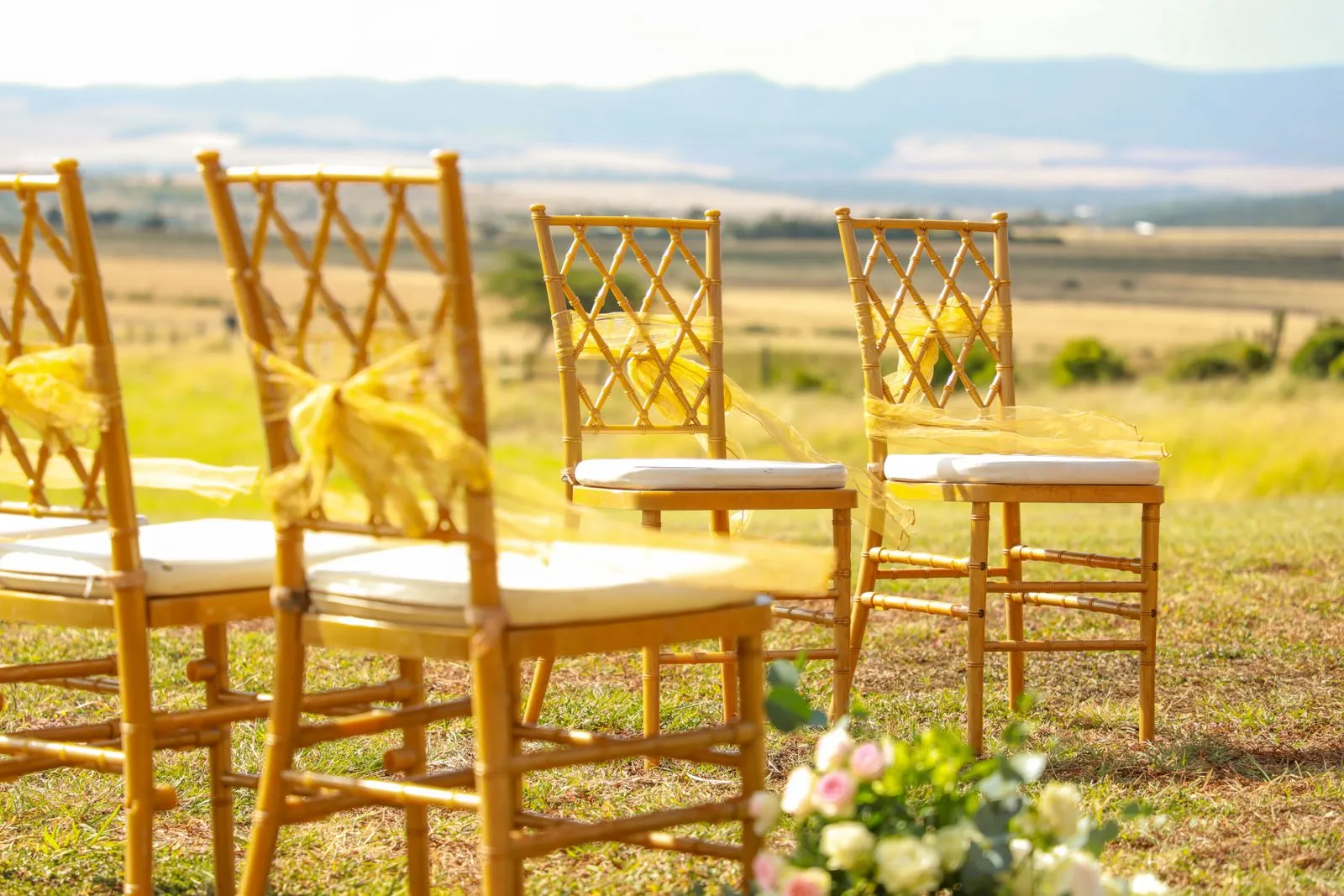
Review light from the positions you will actually use
During a visit, stand where you expect to say your vows. Look at the officiant’s position and the space for readings as well. A shaded arch may leave one person in sunlight while the other is in a darker area. Discuss possible adjustments before the chairs and decorative elements are placed permanently.
Give your team the date and planned time; a visit under different conditions does not describe your ceremony exactly. Consider guests facing the sun as well. If the layout can change, seek a compromise that respects their experience, access and the setting without arranging the entire ceremony around a single photographic angle.
Keep sightlines and routes clear
Check the view from several guest rows, then consider what your team can frame from the sides and the back. Tall arrangements or a decorative structure may hide faces. Identify elements you definitely want to retain so placement can be discussed with both the people and the resulting images in mind.
Agree on where photographers and videographers may move. A narrow aisle, terrace edge or chairs against an obstacle reduce options. Routes should also make movement easy for relatives. Avoid creating a camera position that requires a guest to step around a stand in a main access route to reach their seat.
Arrange sound before guests arrive
Explain who will speak, where they will stand and what sound system is planned. Your videographer needs to know whether vows and other contributions happen in the same place and whether a microphone will be passed between speakers. Connect the people handling sound and video to discuss possible arrangements and any necessary checks.
Outdoors, wind, nearby conversation or neighbouring activity can affect the sound environment. Location choice and setup should account for this. Also ask how clothing should be prepared if a personal microphone is being considered, without assuming that one particular device is included or suitable for every part of the ceremony.
Describe the moments involving movement
Share the entrance order, who accompanies the couple and any planned contributions. Mention an unusual arrival, a ritual away from the seating area or movement towards guests. Your team can then consider positions instead of discovering a change during a moment that cannot be repeated simply for a photograph or recording.
Example: if a relative brings the rings from a side row, identify the starting point and the intended approach to the couple. This small detail helps everyone assess the route. For the exit, explain what follows the walk down the aisle as well: a pause, a gathering or a move to another location.
Include wind and comfort in the setup
Ask those responsible for installation to review decorations, documents and objects used during the ceremony. Moving fabric or a loose page can become a distraction during vows. Agree on a stable presentation suited to the conditions while respecting venue rules and the clear routes people will need throughout the event.
Consider the waiting experience for older relatives, children and guests with specific needs. Somewhere to pause, clear access to seats and straightforward information about what happens next support participation. These details also reduce unexpected movement in front of the team once the ceremony is underway and everyone is trying to follow it.
Prepare a complete alternative layout
The weather plan should state where the ceremony moves if outdoor conditions are unsuitable, who decides and how the change is communicated. Check the alternative space’s capacity, seating arrangement, access and sound requirements. Moving an arch alone does not transfer all the practical arrangements required for the ceremony to function.
Share both layouts with the relevant people. Ask what needs advance preparation and what can be moved without disrupting guests. If the scenario changes, clear communication helps prevent sound equipment being set up in the wrong place or the photography and video team arriving at a space that is still being rearranged.
Frequently asked questions
Should an outdoor ceremony always face the sun?
There is no single ideal direction for every setting. Sun position, shade, the backdrop and people’s comfort need to be considered together with the team and the venue before selecting the arrangement.
Do we need to ban phones to help the photographs?
You can request a ceremony without devices or simply ask guests to keep aisles clear. Have the preference communicated clearly. It is your choice and should reflect the ceremony experience you want to share with your guests.
More ideas
for your day.
Indoor wedding photographs: choosing and preparing a setting
Choose an indoor wedding portrait setting by reviewing light, room to move, backgrounds, access and preparation for both couple photographs and family groups.
ExplorePhotography and video in a dim wedding reception room
Plan photography and video in a dim reception room with clear expectations for atmosphere, useful lighting, speech positions and coordination between suppliers.
ExploreIt all begins
with you.
A date, a place, a few ideas. Tell us what you have in mind, and let’s imagine memories that feel like you.
Check our availability