
Indoor wedding photographs: choosing and preparing a setting
An indoor setting for wedding photographs needs to suit the people using it. Light, depth and access matter as much as furniture or decoration. A simple room can support personal images when its arrangement allows faces to be seen, people to move and framing to change. Start by identifying the portraits you want, then assess the space with your team. This helps you choose a setting that works during your actual wedding day rather than judging it only by how attractive it looks in a photograph of an empty room.
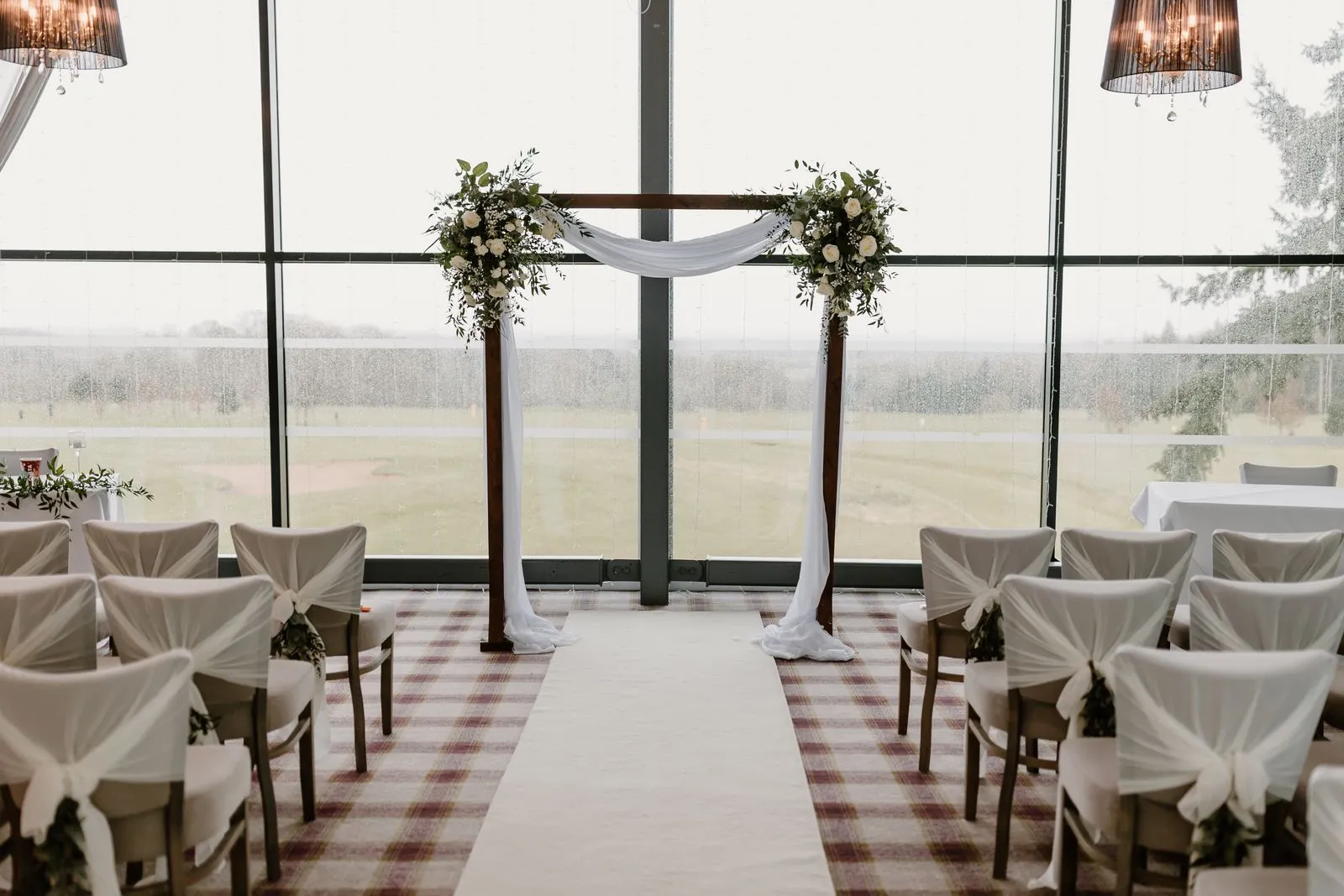
Identify the people and photographs the space must accommodate
Separate the needs of couple portraits from those of family groups. A small corner may work for two people and become cramped as soon as relatives join them. Prepare your priority groupings before choosing the setting so you can consider the number of people, their positions and any mobility requirements.
Explain the planned use as well: portraits during preparations, a couple session or a backup for several families. One space can serve different purposes at different times. Check that furniture, luggage or another supplier’s equipment will not make it unavailable during the particular window when your photographs are meant to happen.
Observe the light beyond window size
Look at how light reaches people and what stands outside the windows. A large opening does not determine the result by itself: direction, curtains and external obstructions change the possibilities. Send your team views taken towards different sides of the room and explain when you expect to use the setting for portraits.
Discuss existing lights and any venue rules about additional equipment. You do not need to design a technical setup yourselves. Your role is to explain the appearance you enjoy and the constraints you know about so the team can assess an approach suited to that particular interior and the people involved.
Allow depth around the people
A room may look spacious yet offer little room to step back once people are in position. Consider the space in front of and behind them, beyond the width of the wall. Being able to change an angle or move farther away can add variety without requiring everyone to relocate to another room.
Example: a favourite armchair in a lounge might suit the couple, while a clear area nearby accommodates standing groups. Before moving the chair, ask the venue’s permission and establish who can handle it. A furniture choice should not create an obstacle in a route guests need to use throughout the wedding.
Simplify the background with a clear purpose
Choose the portion of the setting that will appear behind people and remove movable distractions with permission. Bags, packaging and piles of clothing may attract more attention than the room’s architecture. Identify a storage location so those items do not simply reappear behind the next portrait when the camera angle changes.
Check mirrors and reflective surfaces from possible positions. They may reveal a busy doorway or objects you thought were outside the frame. Also identify meaningful details, such as family furniture or an important painting. Simplifying a scene should leave room for the elements that explain why the location matters to you.
Confirm permission and actual availability
Check that photography and video are permitted in the selected area for your event at the intended time. Ask whether other groups may use it, which zones must remain clear and whether any equipment is restricted. General permission to enter a building does not establish every condition needed for a portrait session.
Plan how people arrive: which door to use, where to meet, where coats can go and which route is accessible. If the room also welcomes guests, coordinate a usable window with those responsible. This avoids having several families wait in a hallway without knowing when they can enter or where they should stand.
Create variety without collecting more locations
A suitable interior may provide a wider portrait, a close view and an interaction near a window without major changes. Explain whether you prefer a quiet, architectural or family atmosphere. Your team can pursue coherent variety instead of reproducing references that would each require an entirely different type of room.
If the interior is your backup plan, appreciate its strengths before the wedding so you can adopt it confidently. Keep a brief checklist: confirmed space, largest group assessed, storage arranged and a responsible person identified. A prepared setting leaves more attention for the expressions, gestures and relationships you want the photographs to preserve.
Frequently asked questions
Does an interior need to be entirely white for portraits?
No. Colour and texture can contribute to the story. Show the room to your team to discuss its light, backgrounds and how those qualities work with the visual approach you enjoy in their photographs.
Should we reserve several rooms for more variety?
Not necessarily. Different angles in one room may be enough. First assess depth, planned groups and availability; moving repeatedly between rooms may add effort without improving the memories that matter most to you.
More ideas
for your day.
Photography and video in a dim wedding reception room
Plan photography and video in a dim reception room with clear expectations for atmosphere, useful lighting, speech positions and coordination between suppliers.
ExploreFirst dance: coordinating lighting with your wedding suppliers
Coordinate first-dance lighting with your DJ, venue and photo and video team through clear positions, shared cues, planned effects and a simple sequence.
ExploreIt all begins
with you.
A date, a place, a few ideas. Tell us what you have in mind, and let’s imagine memories that feel like you.
Check our availability