
Photography and video in a dim wedding reception room
Planning a reception in a dim room starts with separating the overall atmosphere from the locations where important moments will happen. You can enjoy an intimate setting while considering suitable light on faces during speeches or dinner. Give your team information about the room and planned lighting, then coordinate possible adjustments with the people responsible. This conversation establishes realistic expectations for photographs and video without requiring you to turn the reception into a technical exercise or make unfamiliar equipment decisions during the celebration.
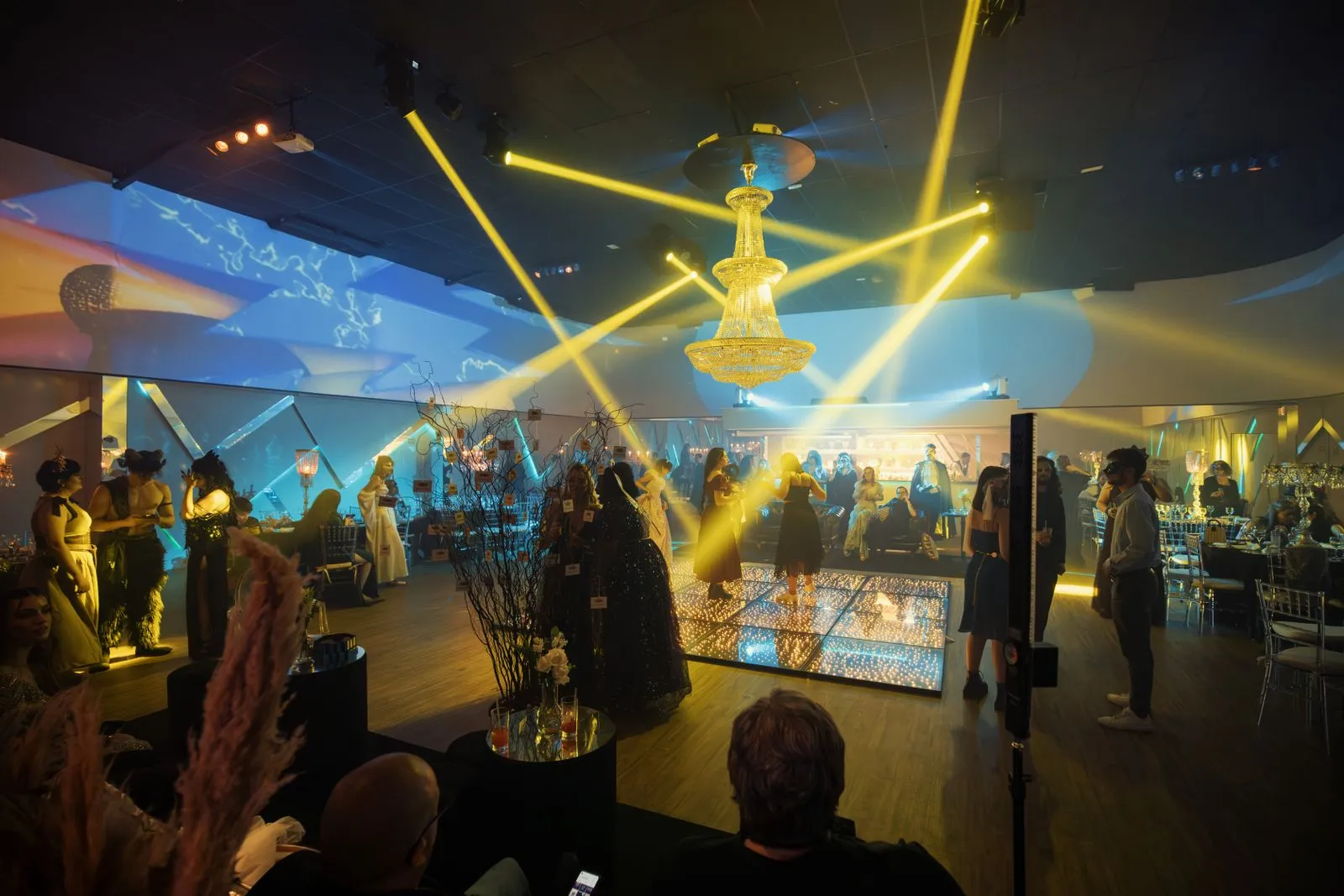
Describe the atmosphere through specific examples
Explain what a dark reception means to you: tables lit by decorative lights, coloured walls, a subdued ceiling or a more animated dance floor. These situations require different conversations. Select a few references and identify what you want to experience in the room as well as what you appreciate in the resulting images.
Then review comparable receptions in your team’s work. Discuss the appearance of people, the visibility of the décor and differences between still photographs and video sequences. Avoid expecting identical results from scenes lit in different ways. References are most useful when they clarify preferences rather than becoming a fixed requirement for another room.
Map the moments when faces need attention
Identify where the couple, speech-givers and relatives whose reactions matter will be sitting or standing. A room can provide enough light for movement while leaving someone’s face in a less useful area. Share the table plan and indicate where contributions will happen rather than assuming every position offers the same conditions.
Example: a parent speaks from an agreed position near the head table instead of selecting a new spot at the last moment. The people responsible can assess that area and the reactions visible nearby. This also helps organize microphone movement and prevents a decorative arrangement from hiding the speaker during the speech.
Connect the venue, lighting contacts and your team
Ask who controls the room lights and who can change them during the reception. Architectural lights, decorative elements and dance-floor lighting may be handled by different people. Connect those contacts with photography and video so they can discuss restrictions, access and the changes expected at different points in the celebration.
Check what additional equipment is permitted, where it could stand and which routes must remain clear. Do not assume that a particular setup is included in your agreement. Needs and possible solutions should be discussed with your team according to the selected coverage, the setting and the people responsible for installation.
Understand the needs of photographs and video
A photograph captures one instant; a video sequence needs continuity while an action unfolds. A solution considered for some portraits therefore does not necessarily describe the approach to a reception film. Ask how both disciplines intend to work together during speeches, reactions and movement between the tables and other activity areas.
Include guest comfort and your own sensitivity to changes in light. You can ask about how visible equipment may be and which areas it would affect. The purpose is to understand the tradeoffs before the wedding, then let the responsible professionals choose settings appropriate to the conditions that are actually present.
Prepare transitions between reception activities
The room may move from a quiet meal to speeches and then to an animated celebration. Note transitions that need a shared check, and identify who gives the signal. A lighting change made during a speech can alter the visual atmosphere before the team has had an opportunity to prepare for it.
Keep a straightforward reference for spoken moments: agreed location, ready microphone and planned lighting. If someone makes an unplanned contribution, ask your host to alert the team when possible. Discreet communication can support adjustments without turning every speech into a formal interruption while people wait for technical decisions to be made.
Allow the room to retain its actual character
An intimate setting may produce images in which some parts of the room remain subdued. Discuss that choice before expecting a very dark background and every guest clearly visible across the entire space at once. Your team can explain its approach and the environment’s limits without guaranteeing a result identical to another reception room.
Before the wedding, gather the layout, technical contacts, selected references and known restrictions. Confirm that the relevant people share the same information. This preparation allows you to enjoy the reception with understood expectations instead of needing to make all the lighting decisions during an important speech or a moment with your family.
Frequently asked questions
Should every room light stay on throughout the reception?
There is no universal rule. It is more useful to assess important zones and activities with the venue and your team. Some adjustments can be limited to particular moments while respecting the atmosphere you want.
Are decorative lights enough for the wedding video?
Their effect needs to be assessed in the actual context. They may contribute to the décor without providing the desired light on people. Share their placement and planned use with the videographer to discuss possibilities.
More ideas
for your day.
First dance: coordinating lighting with your wedding suppliers
Coordinate first-dance lighting with your DJ, venue and photo and video team through clear positions, shared cues, planned effects and a simple sequence.
ExplorePlanning a wedding photo session in Old Montréal
Plan wedding portraits in Old Montréal with a practical route, permission checks, crowd considerations and a usable weather backup for your day.
ExploreIt all begins
with you.
A date, a place, a few ideas. Tell us what you have in mind, and let’s imagine memories that feel like you.
Check our availability