
How to prepare getting-ready spaces for wedding photographs
A useful getting-ready space offers room to move, workable light and an atmosphere where you feel comfortable. You do not need to turn a familiar room into an impersonal set. A few practical decisions can make the images clearer and the morning easier to navigate. Before moving furniture or booking another room, share information about the space with your team so you understand what would actually help. Preparation should make your experience more comfortable while giving the photographer and videographer a workable place to observe it.
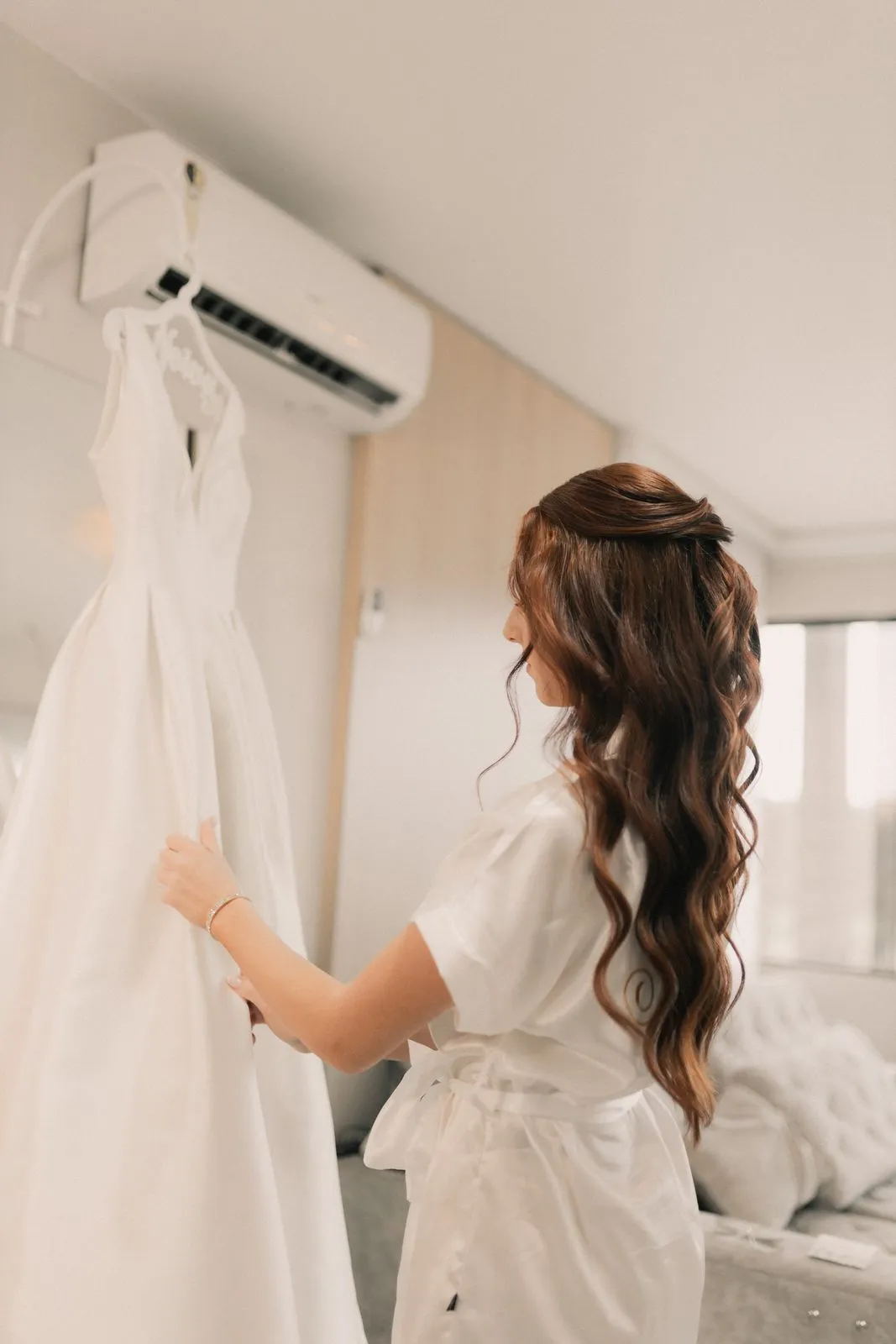
Look at the light before choosing the room
The largest room does not always have the most useful light. Notice the windows and the areas where getting dressed might happen. Light changes through the day, so a visit at another time does not describe exactly what the wedding morning will look like. Your team can work with possibilities rather than a guaranteed effect.
Simple photographs of the room and its entrances can support that discussion. Avoid depending on a particular beam of sunshine. Keep an option near a window and another usable area if weather, activity or the movement of people makes the first choice less practical.
Clear a zone without removing the personality
Choose one area for clothes, bags and packaging that should not occupy the middle of the room. The purpose is to free useful surfaces and walkways, not remove every sign of life. Getting-ready photographs can include the everyday objects that genuinely tell the story of your morning and the people sharing it.
Ask someone to keep the passage clear and gather objects that have been moved. Avoid distributing important belongings among unfamiliar cupboards. When rings, accessories and documents keep changing places, the final preparations become harder for everyone, even if the room looks temporarily tidy.
Decide where each activity can happen
Hair, makeup, dressing and private family moments may need different areas. Speak with suppliers before changing their setup. A well-lit working table is not necessarily the best portrait background, and both needs should be accommodated. Avoid asking a supplier to repeatedly interrupt work simply to make a surface appear empty.
Keep a stable place to set things down and somewhere comfortable to sit. If you want a moment with a parent, choose an area large enough for the people involved. Real movement matters more than a backdrop that looks perfect from only one carefully selected angle.
Plan entrances and privacy
Provide the useful address, building access and directions to the actual room. If several people are getting ready nearby without wanting to see each other, decide who will guide them and which passages they will use. An open doorway can change a surprise that otherwise seemed carefully planned.
Explain what you do not want photographed or filmed while dressing. You can ask the team to wait for a clear signal before entering. Tell the relatives present about that boundary so a well-meaning person does not give permission that differs from your own preference.
Consider sound when video is planned
Background music and conversation are part of preparations, but they may interfere with a letter read aloud or a private message you want recorded. Flag those moments beforehand so the team can suggest a suitable place and approach. The recording needs may differ from the needs of a still photograph.
Avoid combining an intimate reading with everyone talking and furniture being moved. A calmer interval may be arranged within the agreed scope. The real sounds of the morning can still be meaningful; the aim is to choose intentionally which sounds should be clear in a particular moment.
Make one final practical check
Before preparations begin, check walkways, essential accessories and the place where personal belongings will stay. Have water and whatever you need for comfort available. A room that feels pleasant to use supports natural expressions more effectively than a long list of decorative instructions that everyone is trying to remember.
If the room is small, say so plainly. Your team can consider positioning and priority images. Avoid creating a last-minute move solely for an imagined aesthetic. A familiar, calm and well-organized environment can be a deeply personal setting even without the proportions of a styled editorial room.
Frequently asked questions
Should every object be removed from the room?
No. Keep personal things that matter and gather items that obstruct movement. Preparation should support your experience and give the team workable space without erasing the character of the morning.
Can preparations happen in a small room?
Yes, depending on attendance, access and the images you want. Mention the constraint early so the layout can be adapted and unnecessary people are not gathered in the same space.
More ideas
for your day.
Wedding details to gather before the photographer arrives
Gather meaningful wedding details such as rings, stationery, accessories and personal keepsakes, with a simple plan that supports a calm getting-ready morning.
ExploreHow to help your team record wedding vows and speeches
Prepare vows and speeches with your video team through sound checks, microphone coordination and thoughtful locations that help preserve meaningful words.
ExploreIt all begins
with you.
A date, a place, a few ideas. Tell us what you have in mind, and let’s imagine memories that feel like you.
Check our availability