
First dance: coordinating lighting with your wedding suppliers
Preparing first-dance lighting means bringing together the information held by your DJ, venue and photography and video team. Describe the sequence, the space you will use and the atmosphere you want, then agree on a cue before the music begins. Good coordination does not require you to understand technical settings. It helps prevent each supplier from discovering part of the plan as the dance starts, when your attention should be on enjoying the moment together rather than answering questions about the room.
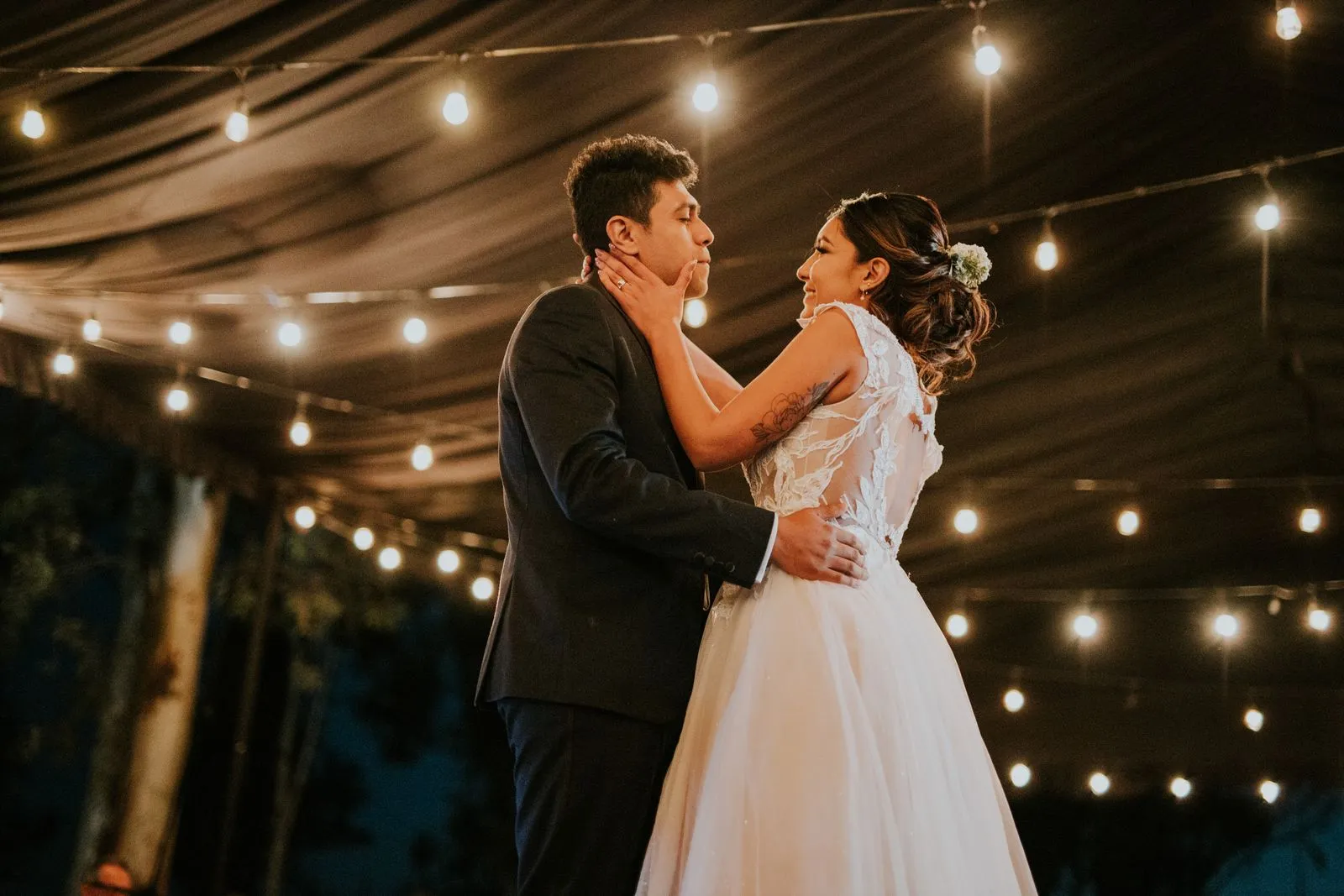
Describe the dance before selecting effects
Explain whether you plan to dance freely, follow choreography or invite relatives to join you soon after the opening. Mention a change of rhythm, significant movement or an entrance from another part of the room. These details influence the areas that need attention and the positions available to the people documenting the dance.
You can preserve a surprise for guests while informing the relevant suppliers. Share useful reference points without teaching the entire choreography: starting in the centre, moving towards one side, finishing alone or welcoming family. If you intend to improvise, say so as well so the preparation allows enough flexibility for your actual movements.
Identify a clear area on the room plan
Agree on where the dance starts and boundaries that will be easy to recognize. Consider nearby tables, columns, speakers and access routes. An open floor does not necessarily provide the same view from every side. The plan should leave room for you, the team and guests who want to watch without crowding the activity.
Example: a discreet reference helps the couple find the intended centre after entering without continually looking at the floor. Discuss any such method with the venue. Avoid adding an improvised object or marking that could interfere with movement or be unsuitable for the surface, even if it appears useful during preparations.
Express the lighting intention in understandable terms
Explain whether you want a gentle, festive or theatrical atmosphere, using a small number of relevant references. Identify what appeals to you in each: visible faces, the setting, colour or contrast. A video from elsewhere does not necessarily reveal its lighting arrangement; it is a conversation starter with those responsible for your room.
Ask your DJ and venue which changes are possible, then let your photography and video team explain their needs. Discuss the difference between lighting the couple and animating the background. The aim is a combination suited to the room instead of a list of requested effects whose actual locations have not been considered.
Share changes and special effects in advance
Communicate any effect planned by a supplier, including moving lights, colour changes, pulsing light or a scenic element. Ask who activates it and at which point in the song. Its use needs to be coordinated with venue rules, people’s comfort and recording requirements before the reception begins, while adjustments can still be discussed.
Clarify whether an effect lasts throughout the dance or appears at one particular cue. Your team can discuss angles and timing with the person controlling it. Avoid adding a last-minute technical surprise without telling those responsible; even a simple visual intention may need preparation different from the arrangement everyone had previously discussed.
Create a shared cue before the music starts
Identify who confirms that the couple, DJ and team are ready. The microphone announcement should not be the first warning received by the people recording the moment. A brief shared confirmation allows them to reach agreed positions and check that the floor is no longer being used for another reception activity.
Prepare the ending as well: music stops, guests join the floor or another dance begins. If a relative enters at a particular point, identify where they will wait and who alerts them. The team can then follow the transition instead of choosing between several actions they are discovering at the same time.
Review the plan and then enjoy the moment
Before guests arrive, or at another agreed point, suppliers can discuss positions and the planned sequence. Ask what can be checked under the venue’s conditions rather than assuming a complete rehearsal will be available. A written sequence and clear contacts are already useful tools, especially when several people control different parts of the experience.
On the wedding day, focus on your partner instead of the equipment. You do not need to keep your face turned towards a camera throughout the dance. If the movement changes a little, continue naturally. The planning supports your experience and helps the team follow what you are actually sharing rather than requiring a perfect performance.
Frequently asked questions
Do we need to face the cameras for the entire dance?
No. Discuss broad positions if useful, then enjoy the dance. Movement and interaction belong to the moment. A rigid instruction to watch the team can make the experience less comfortable and less personal for you.
Who chooses the lighting settings?
The people controlling the lights decide settings in coordination with the venue and your photography and video team. You select the desired atmosphere and share preferences; practical solutions depend on the installation and the possibilities agreed with the suppliers.
More ideas
for your day.
Planning a wedding photo session in Old Montréal
Plan wedding portraits in Old Montréal with a practical route, permission checks, crowd considerations and a usable weather backup for your day.
ExploreChoosing a setting for your wedding photos in Laval
Choose a Laval wedding portrait setting around your route, light, guest comfort and confirmed access, with practical alternatives for changing weather.
ExploreIt all begins
with you.
A date, a place, a few ideas. Tell us what you have in mind, and let’s imagine memories that feel like you.
Check our availability