
How to help your team record wedding vows and speeches
To support sound recording, identify the words you want to preserve and connect your video team with the people managing the ceremony and sound system. A speech that guests can hear clearly does not automatically provide a recording suitable for a film. Distance, surrounding noise and connection options all influence the result. Planning together helps the team assess possibilities and reduce avoidable problems, without assuming particular equipment is available or promising a flawless recording under every condition. The most valuable contribution is clear information shared before the moment begins.
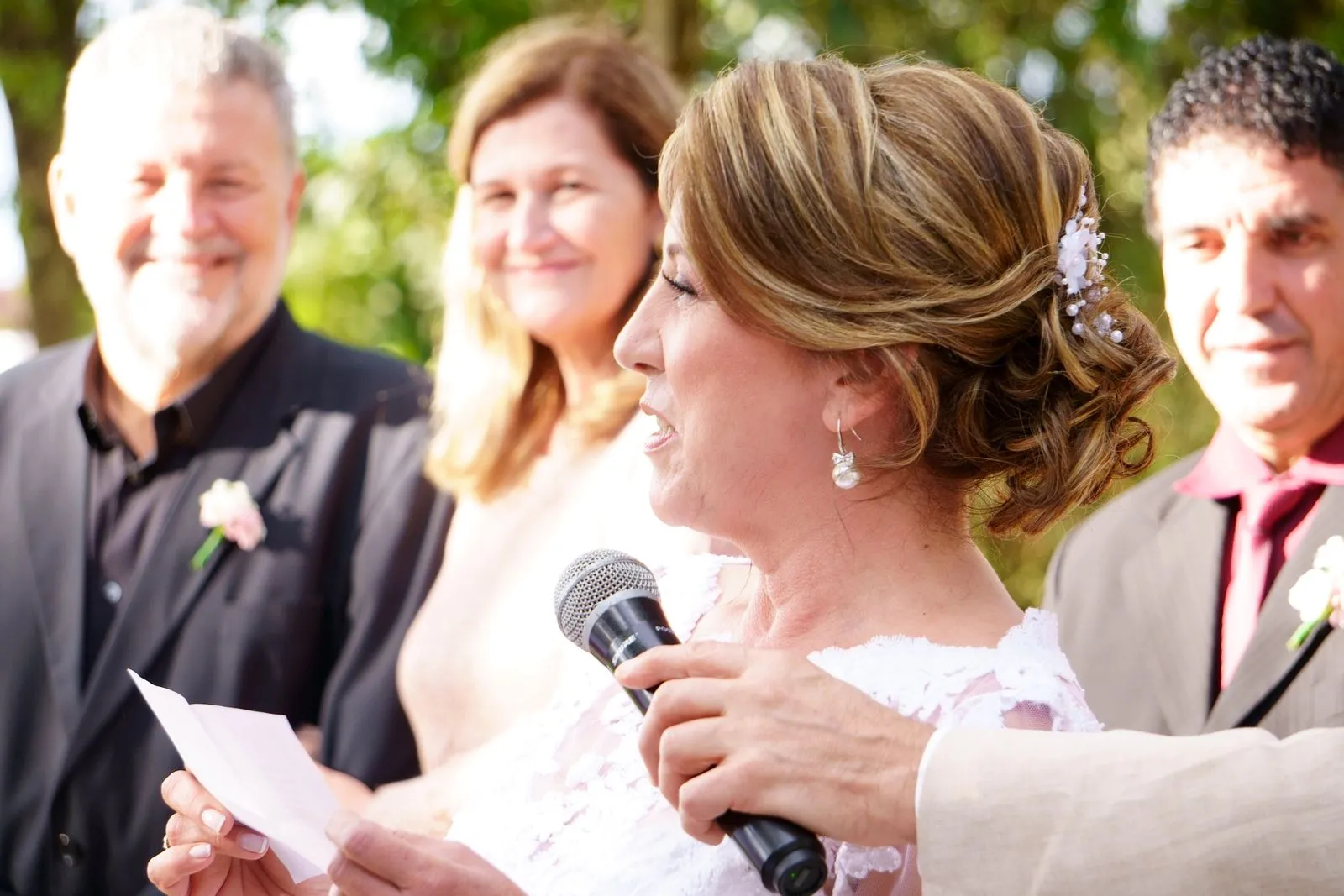
Identify the words that matter
List the spoken moments: vows, readings, private exchanges and reception speeches. Explain which are essential to your memories and which can remain part of the general atmosphere. A trusted person can flag a surprise without revealing its contents to you, giving the team practical information while preserving the experience.
State where each contribution happens and who will speak. Mention multiple languages when relevant so the structure is easier to follow. You do not have to provide an intimate script if you prefer to keep it private; the logistical context is still useful for planning.
Separate amplification from recording
A sound system helps guests hear, while recording aims to preserve a source that can be used in the video. Those needs overlap, but systems do not always connect directly. Ask the people responsible to explain the connections available and whether there is an appropriate opportunity for a test.
Let the professionals decide how equipment should be connected and positioned. Avoid improvising changes to a sound console during the ceremony. A conversation beforehand can establish responsibilities, a suitable checking point and the limits of the solution available at your particular location.
Choose a calmer sound environment
For private vows or a letter reading, look for somewhere conversations, music and noisy appliances can be reduced. A space may look intimate while remaining acoustically busy if it sits beside a kitchen, a main passage or a road. Assess what can be heard as well as what can be seen.
Outdoors, wind and surrounding activity also need consideration. Your team can assess options in the actual setting. Offer several accessible areas rather than depending on one backdrop without an alternative. No location guarantees complete freedom from unexpected noise, even if it seemed quiet during a previous visit.
Give speakers simple guidance
A person delivering a speech does not need a technical lesson. They may benefit from brief instructions from the sound lead: use the intended microphone, keep a consistent position and wait until the system is ready. The guidance should reflect the actual equipment and the speaker’s comfort rather than a generic microphone rule.
Explain who hands over the microphone and receives it afterwards. If the speaker also holds notes or another object, plan that movement so it is manageable. Changes between speakers work better when someone guides them instead of improvising while the next person has already begun speaking.
Communicate changes before they happen
An added speech, a moved microphone or vows read in another location can change the recording plan. Designate someone to promptly inform the video team and sound lead. A short exchange before the contribution begins is more useful than an explanation once a meaningful moment has already passed.
When a surprise is planned, its organizers can share the timing and location without sharing the text. The purpose is respectful anticipation. Avoid asking speakers to wait indefinitely for an installation that was never discussed, or assuming the team will notice a new plan immediately across a crowded room.
Discuss how the words may be used
Explain if certain words should remain private or stay out of a film shared with others. Recording a contribution and including it in an edited film are separate decisions. Final possibilities depend on the agreed scope, the sources captured and the storytelling approach discussed with your team.
After the wedding, raise any new sensitivity about a passage if needed. Sound preparation concerns both clarity and respect for the people speaking. A useful conversation beforehand helps preserve the meaning of their words while setting realistic expectations about the material and its eventual use.
Frequently asked questions
Can a phone record the speeches?
It may preserve a personal memory, but the result depends on placement and the surrounding environment. Do not assume it replaces the recording sources planned with your video team.
Will we need to wear microphones?
That depends on the proposed approach and setting. Discuss comfort, outfits and privacy boundaries beforehand so you understand the available options and how they fit your preferences.
More ideas
for your day.
How to organize a wedding day across several locations
Coordinate a wedding across several locations with clear routes, verified access, transport responsibilities and practical photo and video coverage priorities.
ExploreWhat to do when your wedding day runs behind schedule
Adjust a delayed wedding timeline with clear priorities, calm communication and realistic photo and video decisions that protect your experience of the day.
ExploreIt all begins
with you.
A date, a place, a few ideas. Tell us what you have in mind, and let’s imagine memories that feel like you.
Check our availability