
How to feel comfortable in front of the camera on your wedding day
Feeling comfortable in front of a camera does not require knowing how to pose. It begins with trust, clear expectations and a pace that lets you remain present with your partner. Explain what makes you nervous and what helps you relax. Preparation gives the photographer practical guidance without requiring you to become a different person for the wedding or perform a particular kind of confidence.
Describe the discomfort clearly
Saying “I am not photogenic” communicates a worry but offers little direction for the session. Try identifying the situation: looking at the lens, being watched by guests, receiving several instructions or not knowing what to do with your hands. Each concern suggests a different adjustment to the way portraits could begin or progress.
Explain what you enjoy in existing photographs of yourself as well. An expression, interaction or angle can provide a starting point. You do not need to compile a list of perceived flaws to hide. The purpose is to communicate comfort and preferences so that you can build a respectful way of working with the team.
Agree on how much direction you prefer
Some people relax with precise instructions; others prefer a suggestion followed by time to respond. Discuss that preference before the wedding. You can request short instructions, a demonstration or an alternative position. Mention whether adjusting clothing through physical contact requires checking with you first. Clear expectations make small interactions more comfortable for everyone involved.
Choose a simple way to request a pause or a different approach. An ordinary phrase understood by the team is enough. You can then express a need without explaining your discomfort in front of a group. A clearly stated boundary gives the photographer useful information and helps the session continue in a way that suits you.
Reduce distractions around the session
If being watched makes you uncomfortable, ask for fewer people to accompany couple portraits. A relative can help with belongings without commenting on each pose. Choose a setting where you do not need to watch every step to protect clothing or maintain balance. Your attention should have somewhere easier to go than constant practical concerns.
Leave phones and useful items with a designated helper where practical. Your hands then have more freedom without needing to hold several accessories. If you want to keep a meaningful object, explain that preference. Comfort comes from arrangements adapted to the two of you rather than a universal rule about how every couple should appear.
Begin with a familiar interaction
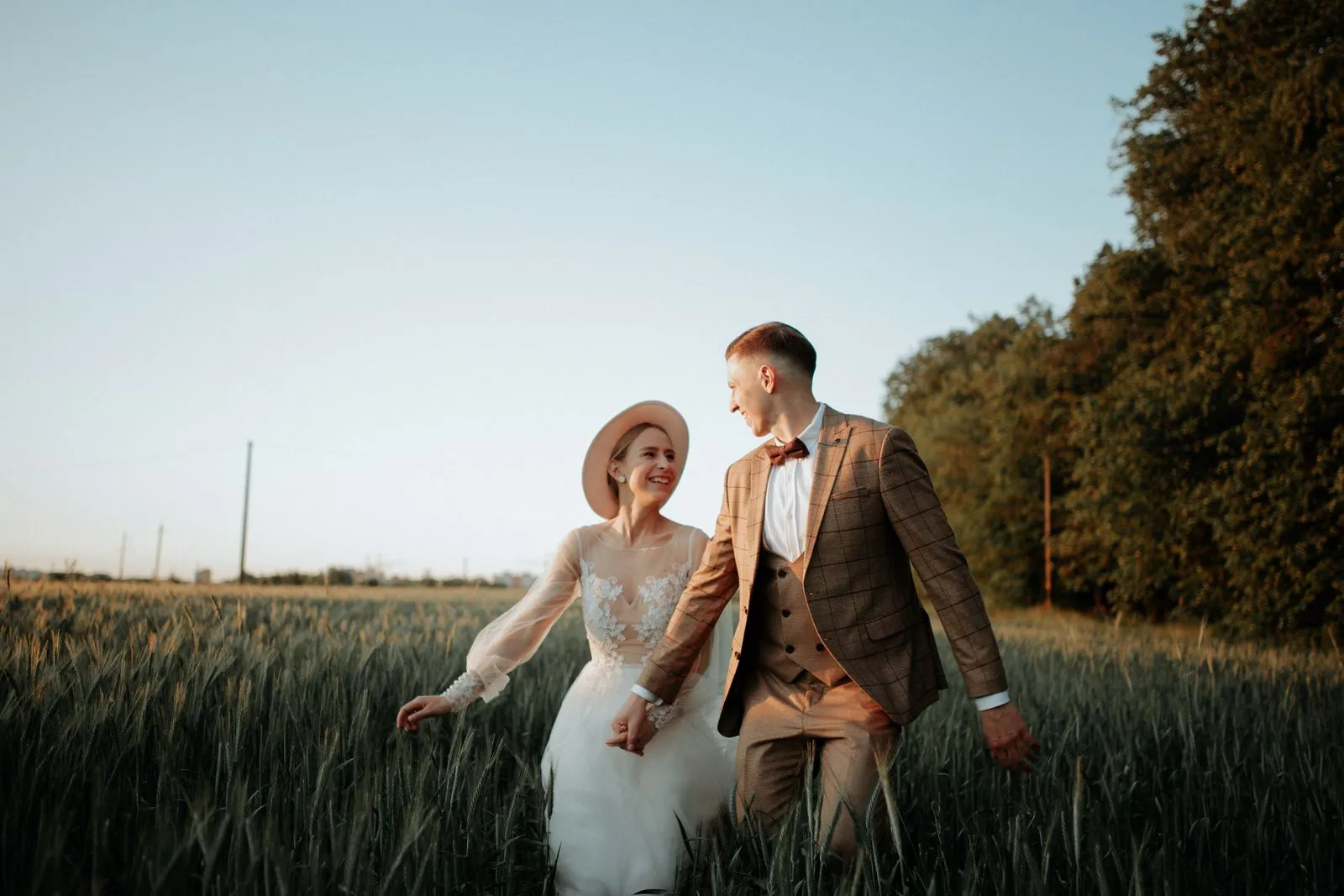
An opening sequence can centre on something ordinary: walking together, talking or gently adjusting a piece of clothing with the other person’s agreement. These actions provide a concrete focus. You do not have to produce an immediate smile or maintain an expression while trying to understand several unfamiliar instructions at the same time.
For example, tell your partner an enjoyable detail from the morning while the photographer finds an angle. If that feels artificial, say so and choose another starting point. A prompt is meant to open an exchange. It should not become a scene you have to perform correctly or an emotion you feel required to manufacture.
Prepare for physical comfort
Try moving and sitting in your wedding clothes beforehand. Notice anything that pulls, slips or needs assistance. Prepare walking shoes and water as appropriate. Enjoying a portrait session becomes harder when you are constantly monitoring clothing or need to rest. Practical comfort can free attention for your partner and the people around you.
Place portraits where a short breathing space is possible. Tell the team about sensory needs, physical limits or fatigue that should shape the session without sharing unnecessary personal details. Discuss the practical adjustments you want, such as breaks, fewer simultaneous instructions or seated options. The useful information is how the session can work comfortably for you.
Allow confidence to change throughout the day
You may feel different during preparations, ceremony and reception. Being more reserved in certain situations is normal. The photographs can reflect that variety without showing the same expression in every frame. Focus on who is present and what you are experiencing rather than maintaining a continuous performance whenever a camera appears nearby.
After an initial sequence, say what is helping and what feels less comfortable. For video, mention your preferences around microphones and repeated movement too. Session arrangements and deliverables should be discussed with the team. No particular personality is required to create wedding memories that feel like an honest reflection of the people in them.
Frequently asked questions
Should we practise smiling in a mirror?
You can if it helps, but it is not required. Real interaction and suitable direction may provide a more comfortable starting point.
Can we decline a suggested pose?
Yes. Explain the limit and ask for an alternative. Portrait suggestions should remain compatible with both partners’ comfort and preferences.
What if my partner enjoys cameras more than I do?
Mention this before the session. The team can adjust pacing and direction so that neither person feels responsible for carrying the entire portrait experience.
More ideas
for your day.
How to create natural wedding couple portraits
Plan natural couple portraits through simple interactions, flexible direction and a comfortable setting that gives your own way of being together room to unfold.
ExploreHow to include children in your wedding photos
Plan wedding photos with children using realistic expectations, a trusted adult and flexible moments that respect their energy, routines and comfort.
ExploreIt all begins
with you.
A date, a place, a few ideas. Tell us what you have in mind, and let’s imagine memories that feel like you.
Check our availability