
How to assess a complete wedding photography portfolio
Assessing a complete portfolio means looking beyond the standout images. Examine how a day holds together: who appears, what you understand about the events and how the work holds up as light or pace changes. This approach helps you ask specific questions about your wedding without expecting it to resemble another couple’s celebration.
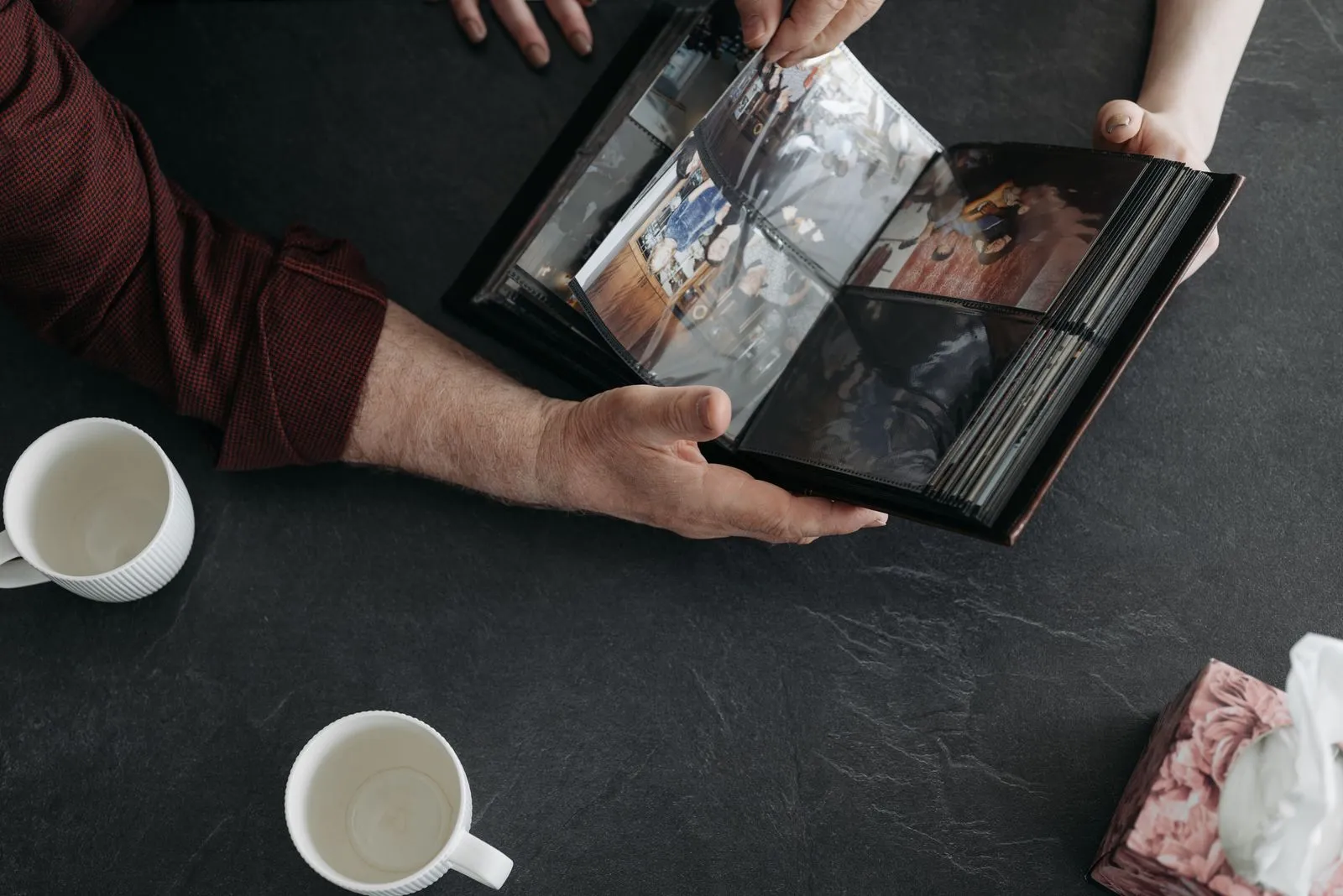
Start with the overall story
Browse the gallery once without stopping at details. Can you recognize the stages of the day and sense relationships between people? A coherent series includes context, close moments and varied events rather than repeatedly offering beautiful portraits with little explanation of the surrounding celebration.
Planning example: the portraits are clear but the ceremony atmosphere is difficult to understand. In that situation, ask to see another gallery with more of the events represented. Add this decision to your notes and check with the person involved that it matches the expected sequence of events. A concrete answer helps reveal adjustments while there is still time to make them.
Observe colour consistency
Compare skin tones, whites and atmosphere across scenes. Photographs do not need to look identical: a reception and an outdoor ceremony have different light. Look for a consistent intention and choices you will enjoy revisiting, rather than judging the whole gallery by one striking effect.
To make this practical, imagine your décor includes colours that are especially meaningful to you. A useful decision is to discuss how the photographic approach interprets colours and atmosphere. Ask how that intention would work on the day, then keep the answer with your schedule. This example helps explain your needs; it does not describe a service that is automatically included.
Examine demanding situations
Pause at indoor scenes, movement and strong contrasts. Check whether faces and gestures remain readable. The aim is not uniform perfection, but understanding how the approach preserves meaningful memories when conditions are less flattering. Compare several photographs from a scene rather than one selected frame.
One situation to discuss is your reception includes a dark room and an energetic dance floor. You can then study a reception sequence rather than limiting your review to outdoor portraits. Name the constraint before choosing a solution. Revisit this point if the location, number of people, or sequence of events changes during your planning.
Look at people beyond the couple
Notice reactions, conversations and the presence of different generations. If loved ones are a priority, check whether the portfolio demonstrates that attention. Distinguish formal groups from spontaneous interactions: they serve different purposes and can complement each other in the same gallery rather than replacing one another.
Consider this example: you want memories of guests who do not know one another well. It makes sense to look at how conversations during cocktail hour and around tables are represented. Confirm who is responsible and what should happen if circumstances change. This brief conversation helps prevent two people from making conflicting decisions at the same moment.
Read portraits as a sequence
A portrait series reveals varied distances, expressions and direction. Ask whether you could feel comfortable working that way. You may like a spectacular photograph while the broader session does not fit your personality or available time. Look for changes in interaction as well as changes in location.
For a useful exercise, start with this situation: you prefer simple gestures to elaborate poses. Your next step is to identify several images whose interactions and expressions feel compatible with you. Compare that decision with your original priorities. If it adds a constraint without protecting an important memory, simplify the plan instead of adding more requirements.
Turn observations into questions
Write down what appeals to you and what remains uncertain. Ask open questions about conditions and photographic choices. A gallery cannot explain everything: some scenes reflect the constraints of that particular wedding rather than a permanent preference in the approach. Use observations to begin a conversation, not reach unsupported conclusions.
Before deciding, consider this scenario: a gallery contains relatively few formal family photographs. You would need to ask how those photographs are planned and whether their role varies by couple. Record what is confirmed, what still needs checking, and who will follow up. This small preparation task makes the conversation more specific and supports the final review.
Frequently asked questions
Do we need a gallery from our exact venue?
No. Comparable light, space and scheduling conditions may be more informative. Ask what the team would need to check at your venue. Similar visual experience does not replace permissions or information specific to your day.
Can we judge only from social media?
Social media often presents a very narrow selection. It can help identify an appealing sensibility, but provides less information about continuity across a day. Follow that first impression with fuller galleries and a discussion of your plans.
More ideas
for your day.
Natural or posed wedding photography: which approach suits you?
Compare natural and posed wedding photography to choose your preferred guidance, prepare expectations and leave room for spontaneous moments together.
ExploreCinematic or documentary wedding film: understanding the differences
Understand cinematic and documentary wedding films so you can discuss pacing, voices, chronology and the filming approach that suits your celebration.
ExploreIt all begins
with you.
A date, a place, a few ideas. Tell us what you have in mind, and let’s imagine memories that feel like you.
Check our availability