
Why voices and sound matter in a wedding film
Voices and sound preserve parts of a wedding that pictures alone cannot hold: an inflection, a laugh, a pause or a loved one’s immediate reaction. They connect the images to your experience of being there. To give them a meaningful place, discuss important words and recording conditions with your videographer early, without assuming that every conversation can be isolated or included in the finished film.
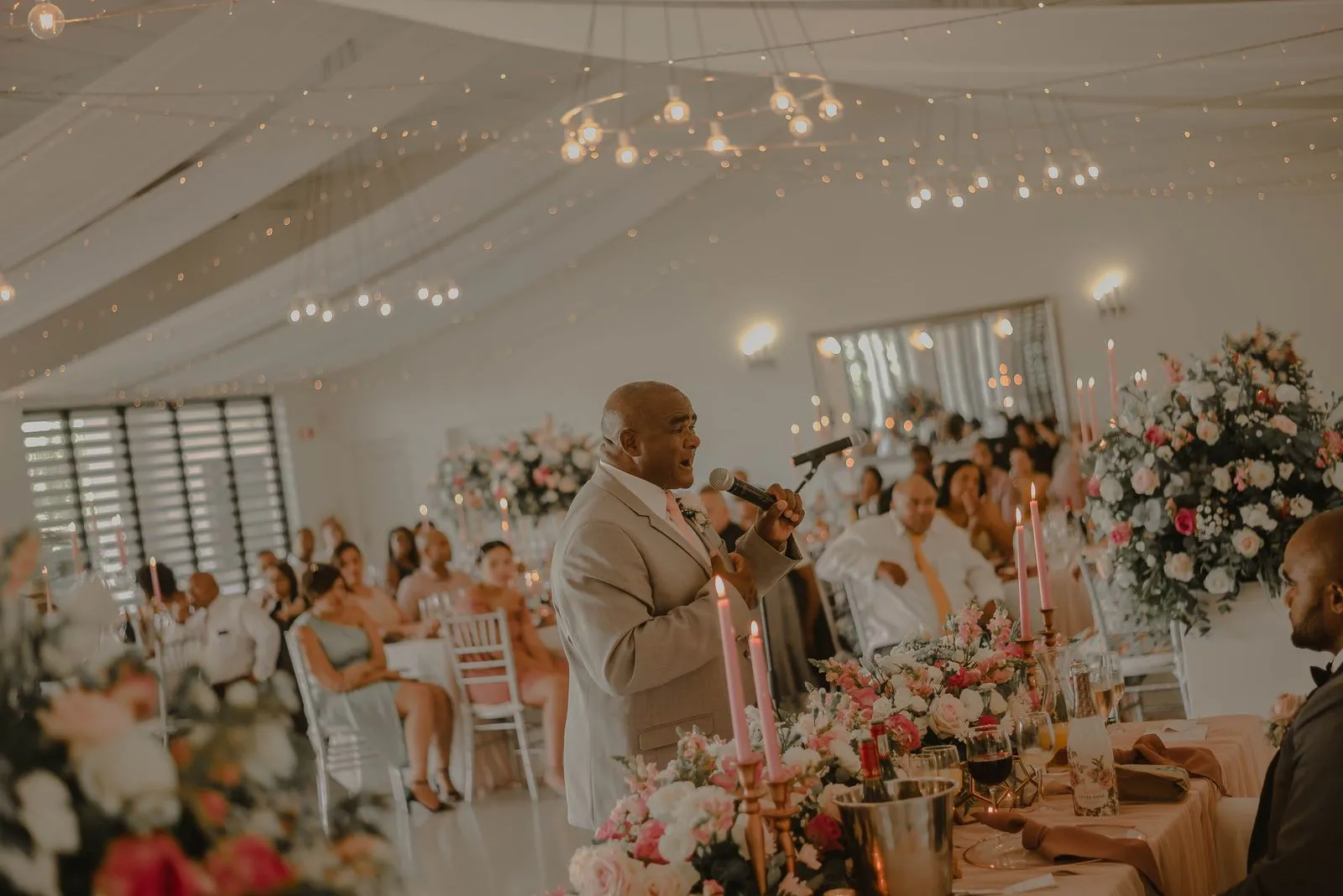
Identify the voices you want to remember
Think about whose voice matters and when those people may speak. Vows, speeches and readings are starting points, but a welcome or arranged conversation can also carry emotion. Distinguish words central to your hoped-for story from exchanges you would enjoy keeping if circumstances allow. This shows where preparation would be most valuable.
Explain why a voice matters instead of requesting more sound in general. Hoping to hear a grandmother read a few words, for example, creates a specific priority to discuss. Tell that person and check their agreement with the recording and intended use. An informed team can assess the preparation required; a distant conversation in a busy reception is much harder to capture clearly and consistently.
Understand how words can shape the story
Words can change the meaning of an image: a promise accompanies a gesture, while a memory explains a relative’s importance. Editing may connect moments recorded at different times to create an emotional thread. If chronological order matters to you, discuss that preference before seeing the completed film.
Share subjects or phrases you prefer to keep private as well. A speech may contain a story that works for the room but feels uncomfortable when shared more widely. Your videographer needs to understand these boundaries, especially if different versions or uses are being considered. Set clear expectations without assuming that every speaker or every meaningful sentence will necessarily appear in the agreed final edit.
Prepare the moments when people will speak
Provide the expected order of speeches and the name of the person coordinating announcements. Flag readings in another language, changes of speaker and planned surprises. For personal vows, discuss where and when you will exchange them and whether the setting supports the proposed recording approach. A location that looks beautiful may have sound conditions that need a different plan or a nearby alternative.
Ask how recording should be coordinated with the officiant, venue contact and sound provider. Confirm what is permitted. If a microphone or recorder is proposed, agree on arrangements with the relevant people. Avoid changing another professional’s installation or promising equipment access before those responsible have discussed the setup.
Reduce the obstacles you can influence
Avoid overlapping important speeches with loud music or another announcement where possible. Ask the event coordinator how transitions can work. Speakers should know which microphone to use and receive guidance from the appropriate professional. A shared plan is more helpful than conflicting instructions just before an emotional reading.
For intimate spoken words, choose a place with the team where voices do not have to compete with conversations, ventilation or constant traffic. If you hope to speak outdoors, discuss wind and an alternative location too. These steps improve the working conditions without guaranteeing complete silence. The recording professionals should make the technical decisions and explain what is feasible within the arrangements you have agreed.
Leave room for the day’s natural atmosphere
Not every useful sound is a complete sentence. Applause, an opening door, moving fabric or guests responding during the ceremony can help locate a scene in the experience of the day. Tell your videographer if you enjoy hearing this atmosphere in sample films. Explain what attracts you without asking the team to artificially recreate every sound found in somebody else’s wedding story.
Then let the moments happen. Asking guests to repeat a reaction may change its spontaneity and interrupt the experience you wanted to preserve. Some sounds will remain part of a wider background; others may be clearer depending on conditions and editing choices. Your most useful contribution is to share the intention, support planned spoken moments and allow yourself to take part in the interactions as they unfold.
Clarify how sound relates to your deliverables
Before booking, ask what is planned for speeches, vows and other important words. An edited wedding film does not automatically mean that complete speeches will also be supplied separately. Record the selected deliverables and their terms in the agreement. Mention the languages being spoken and any needs relating to understanding them, without assuming that transcripts, translations or subtitles are included in the proposed service.
After the wedding, follow the agreed sharing terms and the speakers’ preferences. Reconsider context before posting an excerpt containing personal words. Ask for the instructions that apply to music and distribution of your particular film. Finally, preserve the files you receive using an organized backup method so the voices remain accessible alongside the images rather than depending on a temporary viewing link alone.
Frequently asked questions
Can a videographer recover every guest conversation?
You should not assume so. Spontaneous conversations depend on proximity, background noise and the recording arrangements. Discuss important spoken moments during preparation so their feasibility can be assessed.
Is the room’s microphone enough for the film?
Room amplification and film recording serve different purposes. Your videographer and sound provider need to discuss the available connections, recording options and technical conditions for your particular celebration.
Will full speeches definitely be delivered?
That depends on the agreed deliverables. Ask specifically whether complete speeches are planned, how they would be provided and which terms apply, then have the details confirmed in your agreement.
More ideas
for your day.
Short or long wedding film: how to explain your preferences
Explain your preferences for a short or long wedding film through viewing habits, important memories and clear questions about the proposed deliverables.
ExploreColour and black and white wedding photos: two ways to tell the story
Compare colour and black and white wedding photographs, explain your visual preferences and discuss image treatments and delivery with your photographer.
ExploreIt all begins
with you.
A date, a place, a few ideas. Tell us what you have in mind, and let’s imagine memories that feel like you.
Check our availability